A long letter to my family and friends
Today, I find myself reflecting on the lessons I have learned thus far in life. In these three decades, I have experienced many highs and lows, joys and sorrows, successes and failures. And through it all, I have come to realize that there are certain principles that have served as a compass, guiding me towards a fulfilling and purposeful life. I believe that these principles are not just relevant to me, but to all of us - my beloved wife, my cherished siblings, and my dear friends. As such, I wanted to take this opportunity to share them with you all, in the hopes that they may also bring value and meaning to your own lives.

Dear family and friends,
Today, I find myself reflecting on the lessons I have learned so far in life. In these three decades, I have experienced many highs and lows, joys and sorrows, successes and failures. And through it all, I have come to realize that there are certain principles that have served as a compass, guiding me towards a fulfilling and purposeful life. I believe that these principles are not just relevant to me, but to all of us – my beloved wife and child, my cherished siblings, and my dear friends. As such, I wanted to take this opportunity to share them with you all, in the hopes that they may also bring value and meaning to your own lives.
Despite its length, this letter will offer you a glimpse into a typical day inside my mind and my thoughts about life and how I believe we can live effectively and fulfilled. To begin, let me share with you a story.
WHAT IS LIFE TO YOU?
One night, I felt so overwhelmed by my thoughts that I decided to escape to the top of a remote mountain. I walked through the woods for three hours, from 1 am to 4 am, seeking clarity on my life, values, and beliefs. Despite not finding any answers, I felt a sense of detachment from my body and viewed the world from a different perspective. I realized that as human beings, we are caught in a never-ending race for success, constantly chasing after something we don’t fully understand. It’s as if we are rats in a maze, running after cheese, and our happiness is dependent on whether or not we get a taste of it.
Here’s what still baffles me:
According to scientists, humans have only been around for 0.002% of the universe’s existence, which is about 300,000 years. Out of the 117 billion humans who have ever lived, about 8 billion of us are alive today. That’s just 6.8% of all humans who have ever lived, with 93.2% having passed away. It’s impossible to know how much longer humankind will exist and how many more people will be born. Will it be a million years with 100 billion people or just a few more years with a few billion more people? No one knows for sure.
So here we are, you and I, just two of the 8 billion people alive, in a world full of ambitions, activities, and information. It’s important to take a moment to reflect on our lives, our beliefs, and what we are doing with our time here. The significance of your life, your impact, and your legacy is a question that only you can answer.
Here are some questions for you based on the aforementioned facts:
- Does life have a purpose, or is it all meaningless?
- Is there such a thing as a good life or a bad life?
- Does it matter whether we live a good life or a bad life if we will all eventually die anyway?
- How can we live good lives if there is such a thing?
HOW SHOULD WE THEN LIVE?
My goal for all these facts and questions? Well, I want you to think about them carefully and decide for yourself what to do with them. Whatever your answers may be, take a pause and look at them again. Four things must be clear to you now:
- The privilege of life: Having life out of the over 100 billion dead and the more than over 100 billion people that could possibly exist but don’t exist or might never exist.
- The fragility of life: Eventually, everyone dies. Humanity moves on regardless.
- A subjective worldview: Perhaps, life is how each of us sees it, makes of it and lives it, right?
- Possibility of a better way of living: Why do people struggle to live well when we could just learn from the many people who have lived, and create a guide for effectively living using principles from people's experiences? Shouldn’t we have a system that makes it easier for the young to learn from the wisdom of those ahead of them? Shouldn't we learn from history and from the failures and successes of the experienced and live well?
MY THOUGHTS ABOUT LIFE
If you have never thought about these things, that's fine. I have! Several times! I have carefully observed the world, people, and what happens as the clock ticks. As the clock ticks, it's obvious to me that there is a constant exchange of energy, resources, and people. This exchange occurs on different scales, ranging from individual interactions to broader exchanges within communities, organizations, and even between nations. The ongoing exchange shapes human history and forms the foundation of society, including our economic system, where individuals use their energy and resources to acquire skills and exchange services or goods among one another in order to satisfy their needs and desires until their death.
My conclusion is that how we live this life depends on what we place value on, how we perceive the world and the happenings around us, and the quality of our choices in relation to the use of energy and resources.
WE CAN LIVE BETTER WITH GUIDANCE
Consider how many people have lived this life and how many are still living it. Consider how many people have lived the way you want to live. Now, think about how your life would be if you could learn from them and evolve through learning. Think about how life in general would be if the young could be properly guided by the experienced.
I believe that living well shouldn't be hard. Should it? In the 21st century, we have over 100 billion people who have lived and about 8 billion people who are living to learn from. The problem is whether or not we are willing to learn and evolve. This will require being intentionally curious, radically open-minded, deliberately humble enough to be vulnerable, teachable and guidable.
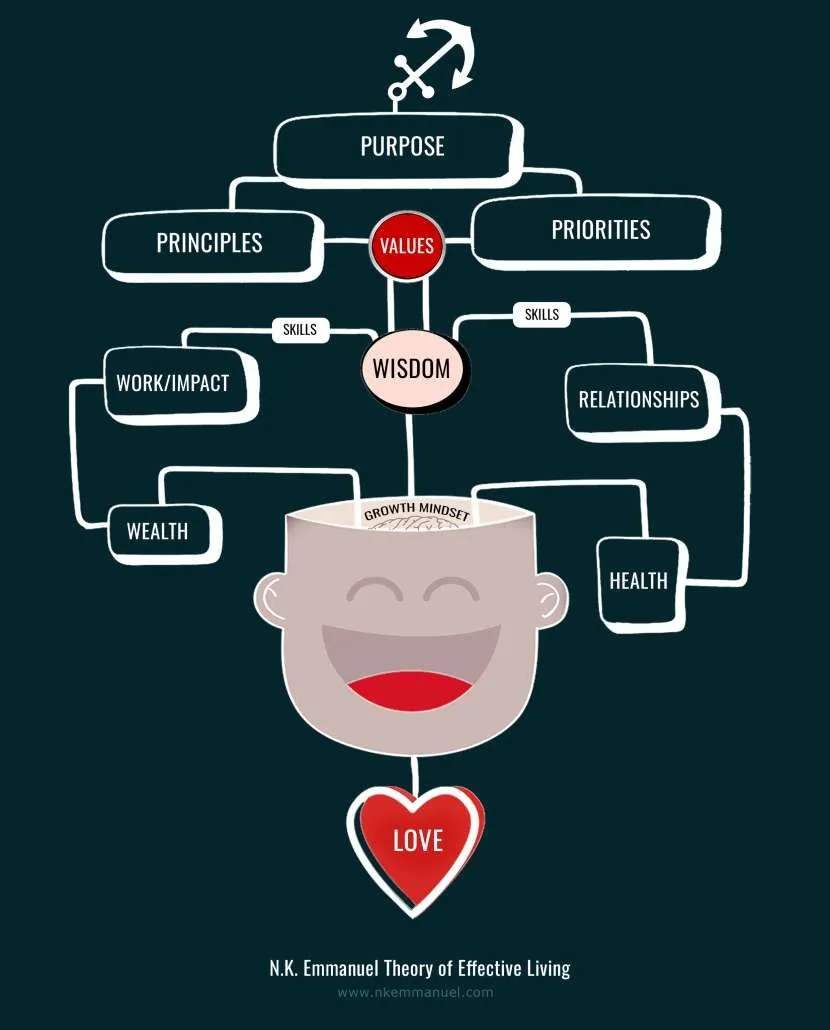
It's obvious that the quality of our lives (to ourselves and others) is basically how much we continue to learn, how much we evolve, how much we love, and how we live our purpose. What I have observed is that seeing life this way allows one to embrace life for its true essence and make the best out of it. Continuous learning, evolving, loving, and living our purpose are essential to living a fulfilling life. By embracing a philosophy like this, we can truly experience the essence of life.
ISN'T EVERYTHING A TRADE-OFF?
Through observing many lives, I have learned that everything in life eventually requires a tradeoff. Each individual has unique experiences, and life is a journey full of opportunities and challenges. Each choice has its benefits and opportunity cost. We give up something good to gain something good. It's just how things are.
Consider these two people as an example. The first is rich and famous, yet he has little privacy and cannot lead a normal life. He lives under the constant threat of fame and fortune, struggles to raise children in a bubble of affluence and privilege, and finds it difficult to balance his high-profile career with his personal life. He is constantly followed by paparazzi and often faces attacks from robbers. However, he enjoys financial freedom, can travel the world, live wherever he wants, has great connections, is socially respected, and has resources that others do not have.
In contrast, the second person leads a life of simplicity and tranquility. He focuses on building meaningful relationships with those around him and faces no threats from robbers or paparazzi. However, he lacks social honor, connections, and financial resources. His children do not have privileges but study and work hard to achieve their goals and acquire the necessary skills to live life as they desire.
Objectively, it is difficult to determine which of these two people has a successful life. If we are to judge it by our personal definition of a successful life, that will be easy. If we are to judge their state or position by their goals and aspirations, that will be easy - a successful life will be who achieved what they wanted.
But obviously, no one seems to have it all, as life requires tradeoffs. Each individual has their own unique set of circumstances and experiences that shape their lives and whether or not they are happy or fulfilled depends on themselves and what they value most. Everyone has the potential to live a fulfilling and meaningful life, regardless of their wealth or status, depending on what they value most and want in life.
Until we realize this, the pursuit of happiness will continue to feel never-ending. Of course, we may experience moments of joy and success, but those feelings are always going to be short-lived. Similarly, the pain of failure will continue to be fleeting. Whether we succeed or fail, we will still wake up with something to strive for, and happiness, like the feeling of success or pain, will continue to be a fleeting feeling.
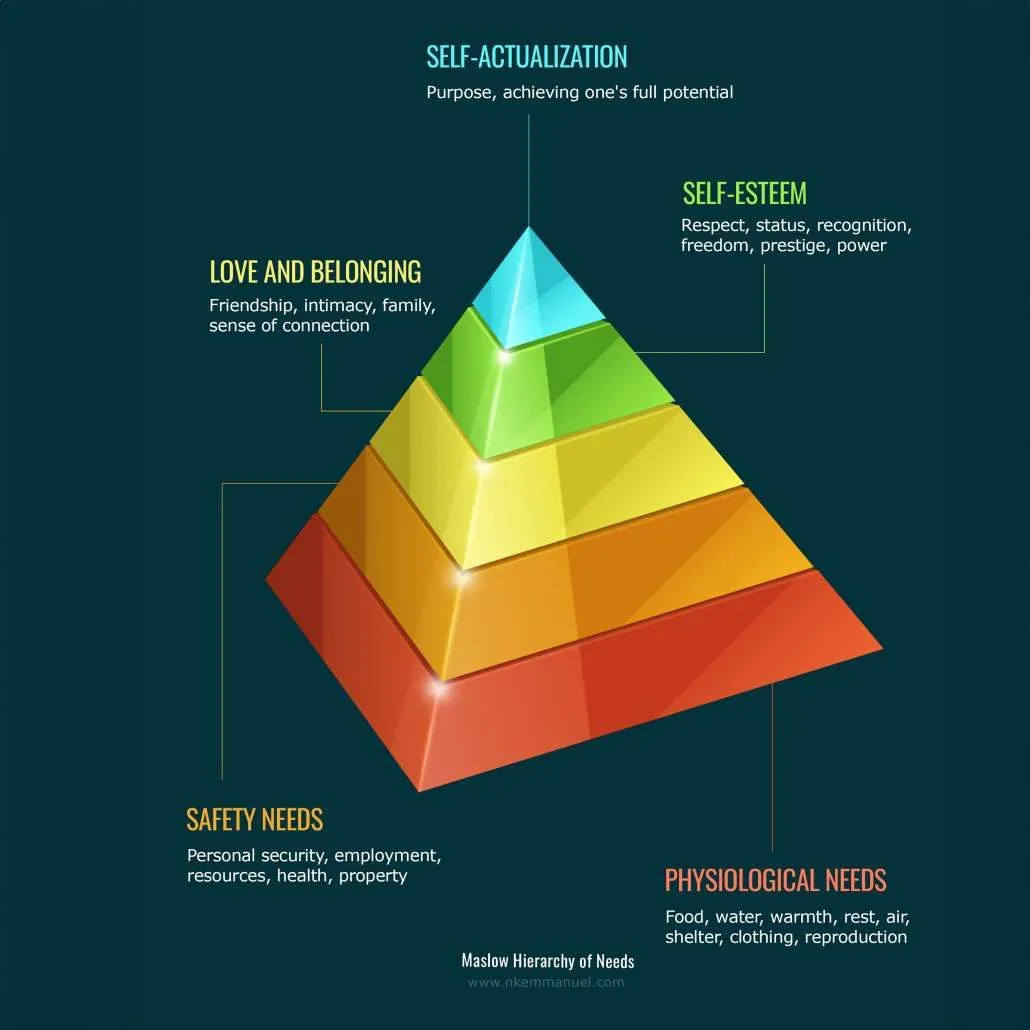
My point is, I have observed that almost everything boils down to what we value in life, how we perceive things, and the choices we make in line with them.Fulfillment is nothing but a subjective feeling of what we desire or perceive to be of great value and eventually accomplish or achieve. This is what most people call "self-actualization" - their highest need.
IS EVERYTHING SUBJECTIVE OR IS THERE AN OBJECTIVE TRUTH?
You may ask, "Why does everything, though seemingly subjective, make us so happy and fulfilled when we have them, and make people feel sad and unfulfilled when they don’t?"
My thought is that it is often because those things hold personal meaning, value, or significance to us. When we place so much value on something, we become very happy when we have it and unhappy when we don’t. It gives us a sense of pride in life and satisfies our ego. This pride and expectation of happiness begin to drive our judgment and actions, determine the emotions we feel, and influence our perception of reality. This is something I have observed to be at the heart of most of society’s virtues and vices.
Is there anything like objective truth? I think so. Everything can't be subjective and true. Personal truth? Maybe, but not objective truth. We all seem to live in our own world, with our own view of what is true and right, important and valuable, yet we have expectations that we expect others to conform to.
It was upon realizing this that I understood that to make the most out of life, we all need to change our life philosophy to something that is true and realistic (if there is one, if we can know). A wrong perception of life creates unrealistic expectations, which eventually makes us feel unaccomplished and less fulfilled, regardless of our accomplishments, possessions, or experiences.
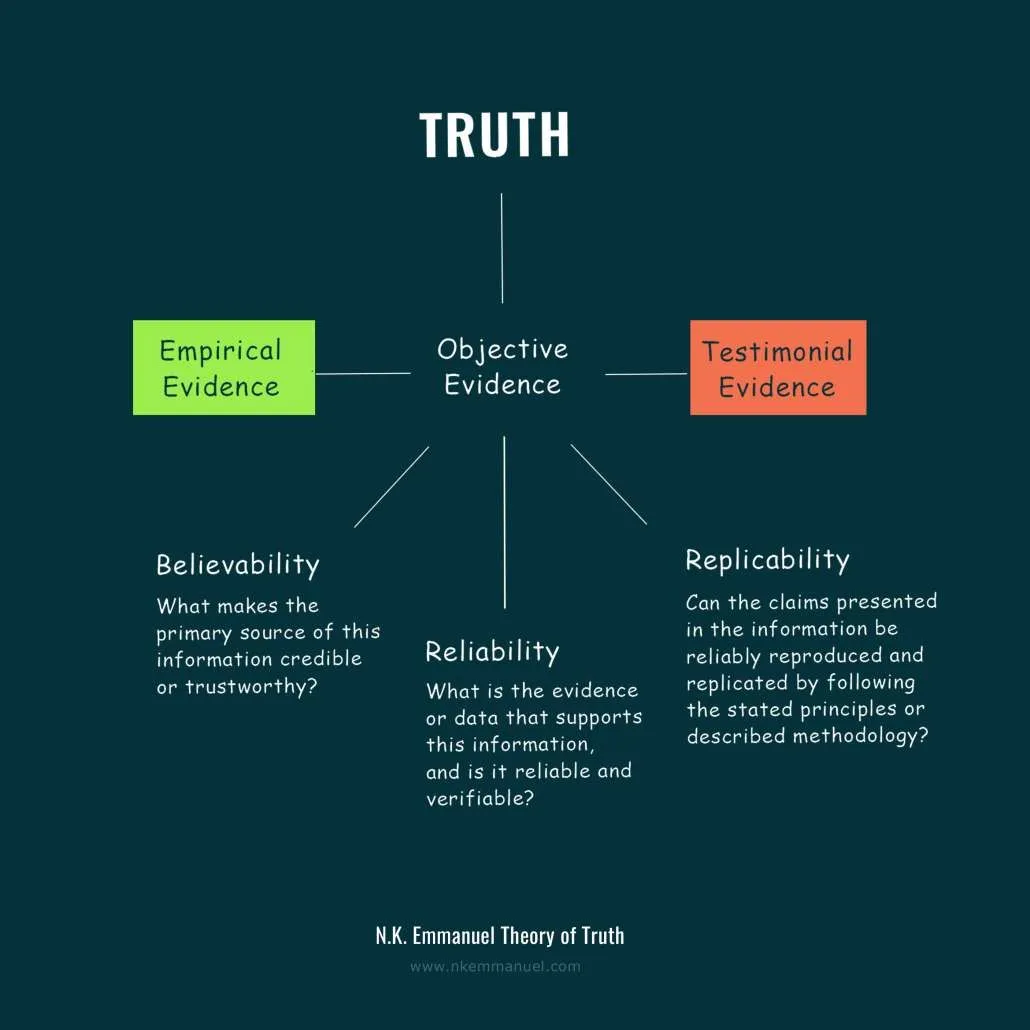
My theory of Truth suggests that the veracity of a statement or belief depends on the coherence or correspondence between the conveyed message or information/data and its underlying objective evidence. This objective evidence should be derived from empirical and/or testimonial evidence based on the claim by assessing the believability of its source, reliability of its evidence, and replicability of its claims.
HOW CAN WE KNOW WHAT IS TRUE AND LIVE THAT WAY?
I believe that if our life philosophy is one of continuous learning, evolution, love, and living our purpose, we will greatly improve how we live our lives. I think that seeing life this way will allow us to embrace life for its true essence and make the best of it.
For years, I have been committed to reading a lot of books, doing a lot of research, consciously learning from many people through personal interactions, direct mentorship, and intellectual debates, and I am amazed at how much knowledge there is in life. With all the books, podcasts, search engines, and AI, there is no limit to what we can know. But what really is the point of knowledge when we do so little with it? To live effectively, we must live wisely. And to live wisely, we must know how to rightly apply knowledge.
This is why I find it necessary for me to synthesize my learnings and convert most of them into principles that can help many people make the most of life, live effectively, and feel fulfilled beyond words. I have created a guide out of these principles to enable us to turn them into actions, track them, and see for ourselves what is true regarding the consequences of what we value, how we perceive things, and the choices we make every day in relation to the use of energy and resources. My hope is that having a Life Guide like this will encourage others to do the same or use my guide to live effectively, or receive well-informed guidance from their parents, counselors, mentors, or advisors. But this letter isn't about that but about principles I believe we all can consider living by in order to make the most out of life.
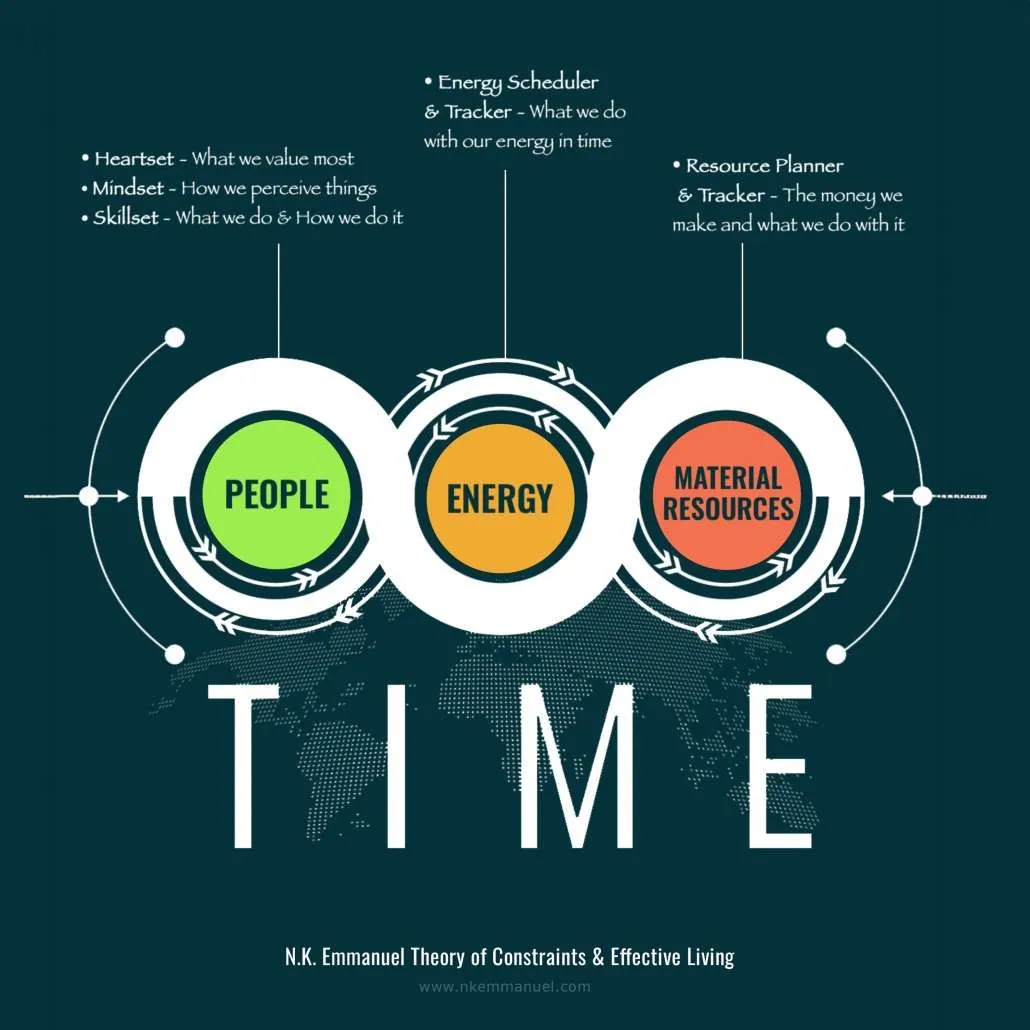
My theory of effective living suggest that life is a harmonious dance involving people, energy, and resources within the constraints of time. To truly thrive in this dance, one must cultivate wisdom and strive for effectiveness.
- Embrace time as a finite resource - manage it effectively through planning, goals, routines, focus and discipline
- Maximize human potential through personal growth, education, and positive connections and relationships.
- Efficiently allocate and conserve personal energy for productivity.
- Practice sustainable resource management, minimizing waste, increasing earning potential and promoting informed decisions.
A. PRINCIPLES FOR LIVING
1. RETHINK YOUR WORLDVIEW - EVERYTHING IS A TRADEOFF
The way we perceive and make sense of the world around us is heavily influenced by our worldview. Our worldview is a deep-seated belief we have about life that underpins every other thought we have as we perceive things. It acts as a filter through which we interpret events and experiences, and determines how we feel about the happenings in our lives. However, it’s important to recognize that our perceptions can be distorted by various factors such as past experiences, prior knowledge, prior beliefs, what we value or desire, and cognitive biases. This results in a subjective social reality unique to each of us.
To overcome the impact of these biases, it’s essential for us to cultivate a worldview that is based on truth and to critically examine our perceptions by seeking evidence that either supports or challenges our worldview or perception of things. Living well involves placing a high priority on truth, not just personal truth but objective truth. What we believe about life, ourselves, or others greatly influences our actions and emotions. This is why we have to develop a habit of taking into account all relevant facts, arguments, and evidence, as well as asking thoughtful questions and engaging in intellectual discussions or debates on our perception of things, so that we are able to come to terms with reality and deal with it as it is.
In order for us to live effectively, we have to understand that everything in life is a tradeoff. This means that everything we gain comes at the cost of something else. Having “A” means not having “B”. Whatever we gain, there is something we lose, and whatever we lose, there is something we gain. So, nobody can have everything at the same time. Let’s understand this and not let gains and losses define the quality of our lives. Instead, let us make principles and priorities the basis of our life choices. This is what is vital to living effectively.
Basically, there are four essential areas of human life: relationships, work/impact, wealth, and health. These areas need a good balance. For instance, excellent relationships require time and effort to develop, and this time may be taken away from work or other pursuits. Similarly, pursuing wealth may come at the cost of our health if we choose to work long hours or neglect exercise. Having principles and priorities, coupled with knowledge, understanding, and proper guidance, creates in us the values that enable us to find the right balance, navigate the complexities of life and make choices that align with our priorities and live effectively.
2. DEFINE LIFE FOR YOURSELF
Defining life for ourselves means determining what we value, what we perceive about life, what a successful life means to us, and what principles we need to live by to achieve that life. It's about understanding the decisions we have to make to achieve our definition of a successful life, rather than following someone else's idea of what a successful life looks like. Because eventually, it will determine whether we feel fulfilled and satisfied with our life or not. It's about being intentional and purposeful in our actions, choices, and the things that align with our values.
It can be a challenging task, but it's a critical step towards living a fulfilling life. It requires introspection, self-reflection, and honesty with ourselves. We need to identify what matters most to us, what will bring us joy and fulfillment and why, and what kind of legacy we want to leave behind and why.
By taking the time to define life for ourselves, we can create a roadmap for achieving our goals and living a life that aligns with our values and purpose. We can prioritize what's important and make decisions that support our vision for our life. We can also stay true to ourselves and make choices that align with our beliefs and values.
Remember that defining life for ourselves is a personal journey. It might take a while to discover what works for us and what makes us happy and fulfilled and why. It's not about conforming to someone else's idea of what our life should look like. So let’s take the time to reflect on what matters most to us, why those things matter to us, and live our life.
3. UNDERSTAND YOUR NEEDS, PLAN YOUR DESIRED FUTURE AND MEASURE YOUR ACTIONS AGAINST IT
Seeing the future we want and making plans for it is an important step in living effectively. Vision gives us something to work towards and a sense of direction and purpose. By visualizing our desired future, setting clear goals, and creating a roadmap for achieving our goals, we create a mental image of what we want to achieve, and this image can influence our actions and emotions and help us stay motivated and focused on what's important to us amidst the numerous things and challenges in life. We are able to prioritize what is important and make decisions that align with our vision.
It's important to set goals that are realistic and achievable, but also challenging enough to provide a sense of accomplishment and fulfillment when we achieve them. Of course, we have to dream big. But we have to break down our big goals into smaller goals and smaller, achievable steps, so we can avoid becoming overwhelmed or be entrapped by wishful unrealistic dreams.
It’s also important to remember that our plans may need to be adjusted as circumstances and priorities change over time. Regularly reassessing and adjusting our plans is essential to staying on track towards our desired future. By being flexible and adaptable, we can overcome obstacles and continue working towards our goals, even when things don't go as planned.
4. USE ENERGY AND RESOURCES WISELY
Understand that as the clock ticks, there is a constant exchange of energy, resources, and people. This exchange occurs on different scales, ranging from individual interactions to broader exchanges within communities, organizations, and even between nations. The ongoing exchange shapes human history and forms the foundation of society, including our economic system, where individuals use their energy and resources to acquire skills and exchange services or goods among one another in order to satisfy their needs and desires until their death.
To make the most out of life, we need wisdom. As I've grown older, I've come to see life through the lenses of time, people, energy, and resources. While we often think about life in terms of the number of days and years that have passed, I believe that the quality of our life is determined by how we view life, the life we want for ourselves and how we maximize our energy and resources to achieve that life.
Planning and tracking our energy and resource usage allows us to understand the consequences of our decisions and make necessary improvements to optimize our lives. To gain insight, we should engage in thoughtful internal and external arguments, seek advice from informed and experienced individuals, and periodically review our choices against our plans to ensure that we are making high-rewarding decisions.
Effective planning of our energy and resource usage and effective tracking of our choices against our plans help us to make effective decisions by enabling us to understand our position at every point in time, manage uncertainty, identify potential obstacles or challenges, develop strategies to overcome them, and prioritize our actions or allocate our resources in a way that is most efficient and effective.
HOW TO SEE THE FUTURE YOU DESIRE
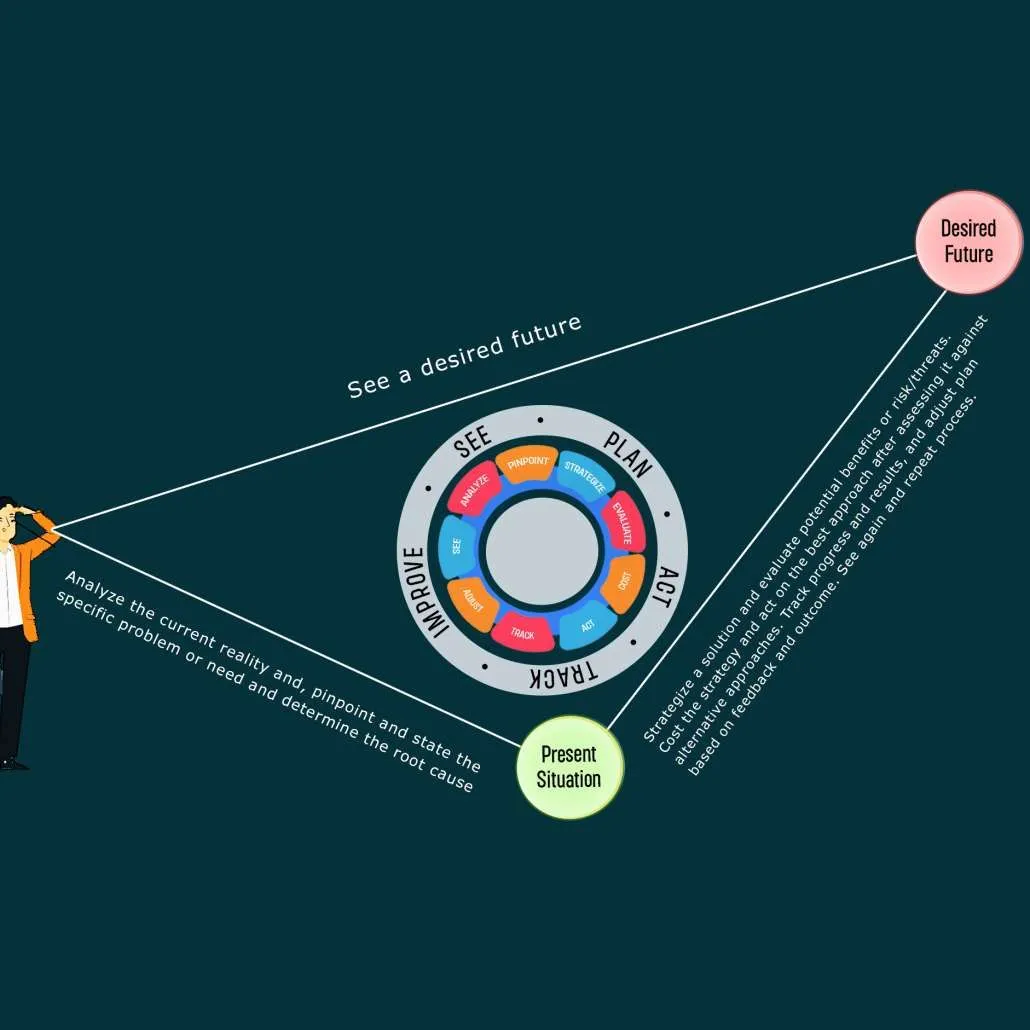
Here is my simple guide to seeing the future you desire - The Vision Triangle. The Vision Triangle uses a model called SAPSECATA to help one see a desired future and how you can get there or achieve that. The SAPSECATA Model is a continuous improvement process that can be used by individuals, organizations, and even nations to create a structured framework for achieving a desired future. The model consists of the following steps:
S - See desired future: Identify and envision a desired future. Establish the goal and define what success will look like.
A - Analyze current reality: Analyze the current reality and identify the gap between the current situation and the desired future. Assess the current state of affairs thoroughly to understand the cause and effect relationship of the situation.
P - Pinpoint specific problem/need: Pinpoint and state the specific problem or need and determine its root cause. This step involves identifying the underlying issues that are preventing progress toward the desired future.
S - Strategize a solution: Strategize a solution and consider alternative approaches. Develop a plan of action to address the identified problems and opportunities.
E - Evaluate potential benefits or risk/threats: Assess the expected advantages and drawbacks of the selected strategy. Evaluate the potential benefits and risks/threats of the strategy.
C - Cost the strategy: Analyze the cost, including the opportunity cost associated with strategic choices. Assess the financial and non-financial costs of the strategy, including the costs of not pursuing alternative approaches.
A - Act on the strategy: Act on the determined strategy and implement the planned solution. Take action to implement the plan of action.
T - Track progress: Track the implementation and results to ensure progress is being made toward the desired future. Have a system to monitor progress, identify obstacles, and make adjustments as necessary.
A - Adjust plan: Adjust the plan or approach based on feedback and outcomes. Use feedback to make improvements and adjust the plan of action to ensure that progress continues toward the desired future. See again and repeat process.
B. PRINCIPLES OF HEALTHY LIVING
1. Plan and track how you use your energy: Managing our energy is essential for maintaining our productivity and overall well-being. To effectively manage our energy, it’s important to plan and track how we use it throughout the day. This involves being aware of our energy levels, planning the tasks we have to complete in a day, understanding what activities drain us and what activities recharge us. By tracking our energy usage, we can make adjustments to our daily routine to optimize our productivity and ensure that we have enough energy to complete all our tasks and to channel our energy productively into tasks that are important and of high priority.
2. Get enough rest: Get enough quality sleep for about 7 hours each night to maintain optimal brain function, improve mood, and reduce the risk of chronic diseases.
3. Spend some time for quiet reflection daily: Schedule regular quiet time for introspection, self-reflection, meditation and prayer to promote spiritual and mental wellbeing.
4. Exercise regularly: Engage in regular physical activity to maintain overall health, reduce the risk of chronic diseases, and improve mental wellbeing.
5. Get regular sunlight: Get regular exposure to natural sunlight to promote vitamin D production, regulate the body’s internal clock, and improve sleep and mood. However, take appropriate measures to protect the skin from UV damage, such as wearing sunscreen, hats, and protective clothing.
6. Practice hygiene and maintain a clean and organized living space: It is important to maintain good hygiene and keep our living space clean and organized in order to promote a healthy and pleasant environment. Regular cleaning and organization can help to prevent the buildup of dirt, dust, and bacteria that can lead to illness and allergies. By keeping our surroundings clean and organized, we can also reduce stress and improve our overall well-being. Additionally, a clean and organized living space can increase productivity and make it easier to find and access the things we need.
7. Plan your diets, feed well and stay hydrated: Maintaining a healthy diet and staying hydrated can significantly benefit our overall health by providing essential nutrients, reducing the risk of chronic diseases, promoting healthy digestion, regulating body temperature, improving skin health, supporting healthy kidney function, flushing toxins out of the body, and improving brain function. Incorporating these habits into our daily routine can lead to improved health and well-being.
8. Manage stress: Managing stress is important for maintaining good health and well-being as stress can trigger harmful hormones and have negative effects on the body, including increased blood pressure and a weakened immune system. When we experience stress, our bodies release hormones that trigger the “fight or flight” response, preparing us to deal with a perceived threat. Techniques such as exercise, meditation, and deep breathing can help reduce the impact of stress and improve overall health.
9. Embrace community and maintain social connections: Stay connected with friends and family to prevent social isolation and promote mental wellbeing.
10. Avoid usage of harmful or addictive substances: Avoiding the exposure or usage of harmful or addictive substances is crucial for maintaining good health. These substances, such as tobacco, alcohol, and drugs, can have numerous adverse effects on our physical and mental well-being. Smoking, for example, is a leading cause of lung cancer and other respiratory diseases, while alcohol can damage the liver, kidneys, and brain. Additionally, drug addiction can lead to a wide range of health problems, including heart disease, mental illness, and overdose. By avoiding these substances, we can reduce the risk of developing serious health problems and maintain a healthier lifestyle overall. Furthermore, avoiding harmful substances can lead to improved quality of life, increased productivity, and better overall health and longevity.
11. Get regular check-ups: Get regular medical check-ups to identify potential health problems early on and provide opportunities for prevention or early intervention.
C. PRINCIPLES FOR WEALTH
1. Have a financial plan with clear goals: It is essential to have a financial plan and clear financial goals written down. Setting financial goals will help us to determine what we want in life, when we want them, count the cost and know when we can afford them, how to get the resources we need to afford them, and how to use, save or invest the resources wisely and make informed decisions that will bring us true fulfillment in life.
2. Always have a budget: Creating a budget helps us to understand our income, expenses, and savings or owing. It enables us to allocate our resources, our income, spending, identify areas where we can cut costs, and put more money towards our financial goals and the things we value most in life.
3. Track income and expenditure monthly: It’s important to keep track of our income and expenditure monthly or often to understand our financial situation. We can use apps, spreadsheets, or financial software to track our income and expenses. By doing so, we can easily identify areas where we can cut costs and increase savings and investment.
4. Always strive to increase your earning potential: It’s important to continually work towards increasing our earning potential. This is because the value of money can decrease rapidly, and our needs as humans are insatiable and constantly growing. Our current income may not be enough to afford what we’ll need in the future. To combat this, let us consider investing in ourselves through further education, acquiring new skills, networking, or starting a business. By doing so, we’ll be able to secure a better paying job or advance in our career or business, leading to a higher income. This will allow us to live the life we want, save more, invest in our future, and create wealth for our family for generations to come.
5. Spend wisely: To make wise spending decisions, it’s important to first acknowledge the powerful influence of marketing and societal pressure to consume. You’re bombarded with sales pitches from every direction, so it’s crucial to be cautious with your spending. Instead of simply following the crowd, prioritize your spending based on your own values and goals. Look for things that will bring you lasting happiness and fulfillment. Avoid the urge to keep up with others or make frivolous purchases just to impress others. Be mindful of your spending habits and resist the temptation to inflate your lifestyle as your income increases. Stick to your financial plan and budget to help ensure you make the most of your money.
6. Save regularly: Saving regularly, even small amounts, can accumulate over time and help build wealth. We can set up automatic savings plans or make it a habit to save a portion of our income every month.
7. Invest wisely: Investing can be a great way to grow wealth, but it is crucial to invest wisely. We should be careful to do research, diversify our investments, and avoid taking on too much risk. But we have to take careful risk in order to have good returns on our investments.
8. Manage debt or avoid it: Debt can be a significant obstacle to building wealth, so it’s important to manage it wisely or avoid it. We should prioritize paying off high-interest debt and avoid taking on unnecessary debt. This means that, we must strive to live below our means. We should avoid overspending, unnecessary purchases and stick to a budget and focus on living within our current income or forecasted income.
9. Create value and sell/offer to as many people as possible: Creating value can lead to increased income and wealth. We create value by solving problems, meeting needs, or providing innovative products or services and selling/offering to many people. By creating and exchanging value, we can increase our income potential greatly.
10. Give back: Another principle that many successful people emphasize is the importance of being a giver. This means being generous with our time, resources, and expertise, and seeking out opportunities to help others without expecting anything in return. The bible tells us to “Give, and it will be given to you. A good measure, pressed down, shaken together and running over, will be poured into your lap. For with the measure you use, it will be measured to you.” (Luke 6:38). Even though we don’t have to give expecting anything in return, we definitely get more back when we give.
D. PRINCIPLES FOR RELATIONSHIPS
1. Practice ‘chesed’: In the Jewish tradition, kindness is expressed with the Hebrew word “chesed” (beginning with a “ch” sound and rhyming with “bless-ed”). But the word means more than simply “kindness.” Often translated as “loving-kindness,” chesed means giving oneself fully, with love and compassion, without expecting anything in return. It is characterized by selflessness and an unconditional commitment to the well-being of others. It involves extending God’s love to others by showing kindness, compassion, forgiveness, and selfless service even as Christ did for us. In essence, it means prioritizing the needs of others above our own and striving to love others as God has loved us without expecting anything in return. By embodying this principle, we can build stronger relationships with others and live a more fulfilling and meaningful life, for love is truly the essence of life.
2. Prioritize your partner and children: To build stronger relationships with our loved ones, it’s important to prioritize quality time together. We must deliberately make time for our partner and children and engage in shared activities, such as date nights or hobbies, family dinner, family prayers, vacations, movie nights, games, walks, or simply by spending time talking and connecting with one another. To achieve this, we have to set boundaries and manage other commitments like work or school, so that we can have the time and energy needed to nurture our relationships with our partner and children. This can help to create balance and harmony in our lives, and prevent feelings of neglect or resentment. Also, with AI greatly advancing, work changing so fast with needed skill set so different, and societal values being so different, the need for ever-learning and always-present parents in our children’s development can not be overemphasized.
3. Learn to communicate effectively: Effective communication is key to building healthy relationships. We should learn to communicate in a way our partner understand, be open and honest with our partner, expressing our feelings and needs clearly, while always actively listening to and understanding their perspective. Being vulnerable and humble enough to accept criticism and feedback can also help to improve communication.
4. Show respect: Respect is a cornerstone of any successful relationship. This involves valuing our partner’s opinions, feelings, and boundaries, and treating them with kindness and empathy. It also means accepting and appreciating their unique qualities and individuality.
5. Build trust: Trust is essential in any healthy relationship, and it’s built over time through consistent actions and behaviors. We should strive to be reliable, dependable, and keep our commitments to our partner, while also being trustworthy ourselves.
6. Compromise and sacrifice: Relationships require both compromise and sacrifice from both parties. It’s important to be flexible and understanding, finding common ground and solutions that work for everyone involved, even when we don’t always agree.
7. Practice empathy: Empathy is crucial for building emotional intimacy and connection with our partner. We should strive to put ourselves in their shoes and understand their perspective and feelings.
8. Share goals and values: Having shared goals and values can help to create a sense of unity and purpose in a relationship. This involves discussing important life decisions and aligning our aspirations for the future.
9. Cultivate your own happiness and positivity: It’s important to cultivate our own happiness, as well as the happiness of our loved ones, in any relationship. This means being careful with our expectations and the things we place value on, and taking care of our own needs and well-being, as well as supporting and encouraging our partner to do the same. Chasing unrealistic goals can be very draining and can cause one to be always sad, complaining, anxious, or never content which creates a gap no partner can fill. By cultivating our own happiness and positivity, we can create a more fulfilling and satisfying relationship for ourselves and those around us.
E. PRINCIPLES FOR WORK/IMPACT
1. Pursue work that aligns with your values: When our work aligns with our personal values and priorities, we are more likely to find meaning and fulfillment in our job. It’s important to identify what matters most to us and look for opportunities that allow us to make a positive impact in those areas.
2. Focus on impact: Rather than just focusing on earning money or advancing our career, we have to focus on making a positive impact in the world. This could mean working on projects that make a difference in people’s lives, volunteering our time, or using our skills to help others. This will give us a sense of purpose and eventually lead to a feeling of fulfillment.
3. Build strong relationships: Building strong relationships with colleagues, customers, partners and mentors can help us have a greater impact in our work. Strong relationships allow us to learn from others, collaborate effectively, build trust, and create a positive work environment.
4. Stay curious and open-minded: To have a greater impact in our work, it’s important for us to stay curious and open-minded, be willing to learn from others, explore new ideas, and challenge our ideas, assumptions and beliefs.
5. Embrace diversity and inclusion: Embracing diversity and inclusion in the workplace can lead to more creative solutions, better decision-making, and a more positive work environment. By valuing and respecting differences in background, experience, and perspective, we can create a more inclusive and supportive workplace.
6. Continuously improve your skills: To make significant contribution or impact in our areas of work, it’s important for us to continuously develop our skills and knowledge. Always upskilling allow us to evolve to meet the ever-growing needs of our job, contribute more effectively and take on new challenges and make greater impact.
In conclusion, I hope these principles resonate with each of you and provide some guidance as you navigate through life’s ups and downs. Remember that we are all on this journey together, and it is important to support each other along the way. Let’s strive to live with godly character, love and purpose, and to never lose sight of what truly matters in life. Thank you for being a part of my life and for helping me grow into the person I am today. Here’s to many more years of growth and learning together.
I anticipate writing numerous letters to all of you in the future, as I strive to learn and improve. I will ensure to share any important updates along the way. Here’s to a prosperous and satisfying life, all to the glory of God and His Son Jesus Christ (or whoever you live for).
From your love, sibling and friend,
N.K. Emmanuel